
America once fought a twenty-year war in Afghanistan and still lost. That war unfolded in an era when information flowed through a narrow pipeline dominated by Western governments and legacy media institutions.
In that environment, Washington and its allies not only possessed superior military power but also exercised enormous influence over how wars were explained to the world.
From the claims that Iraq possessed weapons of mass destruction to many covert incidents and alleged false flag operations that may only be fully understood when classified archives are eventually opened, the West long relied on its ability to shape public perception as much as battlefield outcomes.
In those years, military power did not come from Tomahawk missiles, aircraft carriers and B-2 bombers alone. It also came from controlling the story.
But the war now unfolding between the United States, Israel and Iran is exposing a harsh new reality: the strategic environment that once enabled Washington to wage war with both military and narrative dominance no longer exists.
The information age has changed the battlefield.
Several incidents in the current conflict demonstrate how rapidly narratives can collapse under the weight of publicly available evidence. What once would have passed through the global news cycle with little scrutiny now faces immediate challenge from millions of observers armed with smartphones, satellite imagery and digital analysis tools.
One recent example illustrates the point clearly. When the United States Central Command accused Iran of launching a missile that struck a residential building in Bahrain, the allegation appeared to follow a familiar pattern from past conflicts. In earlier decades, such a claim might have circulated widely through international media before any competing version emerged.
This time, however, the narrative unraveled within hours.
Footage shared online appeared to show that the missile was not Iranian at all but a Patriot interceptor that had malfunctioned while attempting to intercept a drone. The projectile reportedly veered off course and struck the residential building instead.
With video evidence circulating widely on social media, the accusation against Iran quickly collapsed under public scrutiny.
In previous eras, Tehran could have denied responsibility as much as it wished. But if major Western outlets such as the BBC, CNN, The New York Times and The Washington Post carried the official American narrative, that version would likely have dominated international discourse.
Today, however, the public has access to competing sources of information that can challenge official claims almost instantly.
The controversy surrounding the early stages of the war has been even more intense. On the first day of the attack on Iran, a Tomahawk missile reportedly struck an elementary school in Tehran, killing 171 people, including at least 150 schoolgirls aged between seven and twelve.
The scale of the tragedy sent shockwaves across the world.
American officials, including President Donald Trump, attempted to deflect responsibility for the attack, suggesting alternative explanations for the strike. But the volume of available evidence and the surge of global outrage made it difficult for that narrative to gain traction.
Human rights organizations, the United Nations and several European governments quickly condemned the incident, with many describing it as a potential war crime.
Within the United States itself, the issue triggered political repercussions. Senators reportedly moved to subpoena Secretary of State Marco Rubio and Defense Secretary Gen David Hesgeth to explain the circumstances surrounding the strike.
Such developments illustrate a broader transformation in modern warfare. Military operations that once might have been explained or justified through carefully managed messaging are now subjected to relentless public scrutiny.
Even political messaging itself has become more difficult to control.
Rubio experienced this reality in an uncomfortable exchange with a reporter during the early days of the war. At one point, he appeared to acknowledge that Israel’s actions had effectively drawn the United States into the conflict. Less than twenty-four hours later, he attempted to distance himself from that interpretation.
When questioned about the earlier remarks, Rubio dismissed the claim and suggested the reporter might have misunderstood the exchange.
But the reporter responded bluntly: “Yes, I was there. I asked you the question.”
The moment quickly circulated across social media, highlighting how easily contradictions can be exposed in the digital era.
The credibility challenges facing governments are mirrored by growing public scrutiny of traditional media institutions as well.
For decades, Western news organizations served as the primary gatekeepers of global information about war. Their editorial choices shaped how conflicts were framed and understood.
But audiences today are far less passive than they once were.
A telling example emerged when Sky News published a headline about an Israeli attack in Lebanon that read: “Two Israeli soldiers killed as attack in Lebanon leaves 400 dead.”
In previous decades, such framing might have passed without significant reaction. Today, however, readers immediately challenged the editorial emphasis.
Online critics argued that the headline appeared to prioritize Israeli casualties while treating hundreds of Lebanese deaths as a secondary detail. The backlash was swift and relentless.
Sky News attempted to revise the headline, first changing it to: “Latest attacks in Lebanon leave nearly 400 dead as two Israeli soldiers killed.”
But the criticism continued. Readers asked a simple question: who had killed the 400 Lebanese?
A third revision followed: “Nearly 400 killed in Lebanon conflict as first Israeli casualties announced.”
Even then, the debate persisted. Users posted community notes explaining that the Lebanese victims had died as a result of Israeli military action, arguing that the headline still obscured that context.
Such episodes reveal a dramatic shift in the relationship between media organizations and their audiences.
The public is no longer merely consuming news about war. It is actively interrogating it.
Governments are discovering that the same transformation affects their own messaging strategies.
During the conflict, the White House confidently declared on social media that “Iran’s nuclear facility has been completely obliterated and anyone saying otherwise is fake news.”
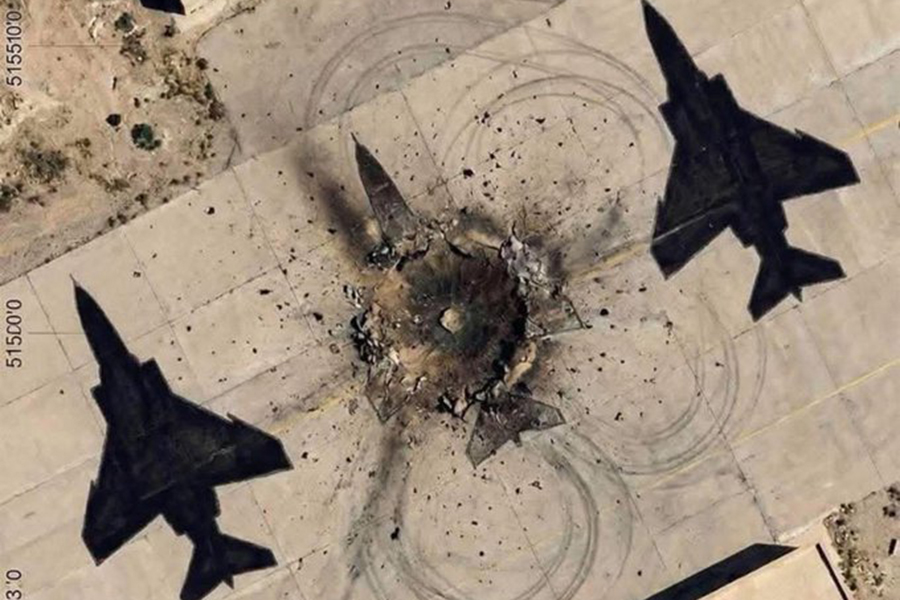
Yet independent analysis soon raised questions about the accuracy of that claim, with satellite imagery and technical assessments suggesting that the damage might have been far more limited.
In earlier eras, such contradictions might have remained confined to specialized military briefings or classified reports. Now they unfold in full view of the global public.
Technology platforms themselves have also become battlegrounds in the information war.
Elon Musk’s platform X has faced intense criticism from users who accuse its algorithms of suppressing certain content related to the conflict. Many users complained that videos showing Iranian strikes on Israeli targets appeared hours later on their timelines, while other posts were promoted more prominently.
Whether those claims reflect actual manipulation or the chaotic nature of algorithmic systems, they illustrate the degree to which public trust in information flows has become fragile.
All of this feeds into a larger geopolitical lesson that Washington appears to be relearning in painful fashion.
Wars cannot be won through military force alone.
Afghanistan demonstrated that reality in the most dramatic way possible. Despite two decades of occupation, enormous financial expenditure and overwhelming technological superiority, the United States ultimately withdrew as the Taliban returned to power.
The Iran conflict now raises similar questions about the limits of military dominance in a far more complex strategic environment.
Iran is not Afghanistan, nor is it Iraq. It is a large, heavily populated nation with deep regional alliances, significant missile capabilities and a population that often rallies in the face of external attack.
Indeed, the political consequences inside Iran appear to reflect this dynamic. Only months ago, protests and internal discontent dominated headlines about the country.
Yet after the outbreak of war, millions of Iranians reportedly took to the streets mourning their leaders and chanting “Death to America.”
External pressure has a way of reshaping internal politics.
For the United States and its allies, the broader lesson may be unavoidable.
The world that once allowed Western powers to wage wars under tightly controlled narratives has changed. Information now moves too quickly, and public scrutiny is too intense, for governments to manage perceptions the way they once did.
Military power remains formidable, but legitimacy, credibility and public trust have become equally decisive elements of modern conflict.
The United States learned that lesson slowly in Afghanistan.
It may now be learning it again in Iran.
